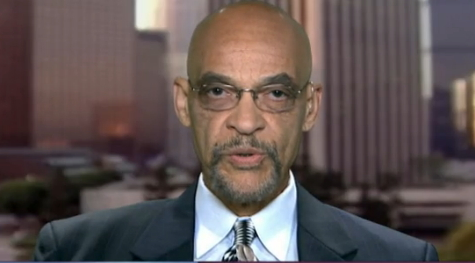
Earl Ofari Hutchinson
Pope Leo pushed back hard and fast against Trump when he publicly declaimed, he was not intimidated by him. Pope Leo could have saved the defiant talk. If anything, the pontiff should conduct a special mass of thanks to Trump.
I say this as a devout Catholic. Yet one who is often critical of the church’s doctrine on abortion, gays, and the role of women. But Trump managed to do something that no other politician has ever done. He rallied just about every Catholic believer, Catholic critic, non-believer, many Muslims, Jews, Buddhists, Hindus, Agnostics, and even atheists in praise of the Pope and rip of Trump.
This is no mean fete. I come back to church critics. There are legions of them without and within the church. One example is Vice President JD Vance, a purported catholic, who quickly did his requisite Trump lap dog bark at the Pope screeching that he should stick to church matters.
Another example is the myriad of conservative Catholic notables, groups, and even U.S. Cardinals. They lambasted Trump’s self-serving, standard megalomaniacal, idiotic anti-Papal rants.
But it’s the other example of those who rallied round the Papal throne that is most intriguing. These are the reform minded Catholics who have relentlessly challenged church doctrine of abortion, the role of gays and women, and its oft times look the other way at pedophile priests. They loudly proclaimed that they had the Pope’s back.
That cast light again on the question that many have asked for years. That is which Catholic Church would emerge in the years after Pope Francis’ death in April 2025. Would it be a Catholic Church that Leo in another of his first pronouncements following his ascension to the papacy did what he called for, “We have to be a church that works together to build bridges and to keep our arms open, like this very piazza, welcoming.”
Church reformers would interpret that to mean the church takes seriously the call for a total overhaul of its teaching and doctrines frozen in time that excluded wholesale groups, lifestyles, and relationships that the church for centuries considered taboo. Church conservatives by contrast would interpret his admonition as little more than generic words that any leader would be obliged to make. But that carried no force behind them when it came to fundamental change.
The church almost certainly would continue to vigorously defend immigrant rights. That was an easy choice since many Catholics
globally were in Asia, Africa, and Latin America. They were the individuals who would make up the bulk of immigrants to the U.S, Canada, and Western Europe. They were the ones who would likely suffer discrimination.
Likewise, it was just as easy for the church to continue to speak out on and fight against poverty and wealth inequality. That was also in the church’s direct interest since much of the poverty and inequality in the world were in the countries with large numbers of Catholics.
However, the betting odds were that it would be a far different story when the debate on church change swung back to the long-standing church views on gays, the family, marriage, abortion, and women’s roles. There were mixed signals on how much change there would be during Leo’s papacy.
Far right Catholic bloggers, groups, magazines, websites, and some church hierarchy poured over then Bishop Prevost’s sermons, quips, and homilies on these issues to find clues which direction he’d try and take the church. They found some that marked him as a traditionalist and others that marked him as a Francis’ type reformer.
When all the mounds of initial speculation on this were finished, the consensus was a wary wait and see. That was best summed up by no less than Vance, a so-called born again Catholic. In an interview, he noted, “I’m sure he’s going to say a lot of things that I love. I’m sure he’ll say some things that I disagree with, but I’ll continue to pray for him and the Church despite it all and through it all.”
There were two views there were universal consensus on when it came to whether there would be any foundational church reversal of its age-old positions on these issues. One was that these issues would continue to be raised. The other was that the battle lines on them would continue to be fiercely drawn with little give from either side.
There would be no dramatic epiphany and then a recitation of the ancient Catholic repentance call punctuated by three strikes of the breast mea culpa mea maxima culpa. Translated: through my fault, through my fault, through my most grievous fault.” That best sums up Trump. Pope Leo’s blast simply underscored that.
Earl Ofari Hutchinson is an author and political analyst. He is the author Combatting the Catholic Church’s Five Mortal Sins (Amazon ebook and Middle Passage Press)
He hosts the weekly news and issues commentary radio show The Hutchinson Report Wednesdays 6 PM PST 9 PM EST at ktymgospel.net