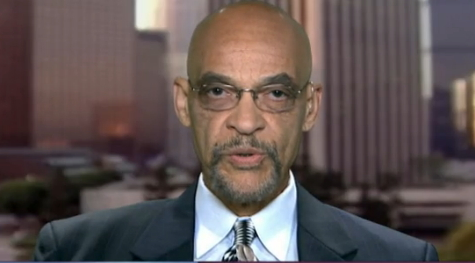
Earl Ofari Hutchinson
Ashley Marie Williams. This is a name that few if asked in L.A. would know. But Williams looms large in an issue that far too often has fallen under the radar scope of the media, the public, local officials, and law enforcement. She is one of the countless number of Blacks, overwhelmingly women, and children, who go missing in Los Angeles almost daily. This mirrors the Black missing persons crisis nationally.
Williams went missing on a South Los Angeles street in August 2025. Nine months later she is still missing. That’s where the story and tragedy begin. Her family contacted authorities, an alert with her picture was posted on some social media outlets, and a standard investigation was conducted. That for all intents ended it.
Williams now became simply another forgotten name and statistic. That statistic is ugly. One out of three children missing are Black children. Nearly forty percent of women missing are Black. In Los Angeles County, forty percent of those reported missing are men and women of color. Black women make up a huge disproportionate number of those reported missing in the city and county.
The huge disparity in the number of Black missing persons, particularly women, has gone hand in hand with the infuriating almost ingrained tendency among the public and much of the media to give short shrift to the issue. So noticeable and infuriating, that it has prompted the coinage of
the term “Missing White Woman Syndrome.” That is when white women go missing, such as Nancy Guthrie, there is a media feeding frenzy and the public is glued to the tragic drama. Nothing of the sort happens when a Black woman is reported missing. However, the disproportionate number of Blacks missing and not found have set off alarm bells.
According to 2022 FBI data, Blacks make up 31% of missing person reports but only 13% of the U.S. population. By contrast, whites account for 54% of missing person reports and 75% of the US population. The Black missing person total may be a gross undercount. The
The National Crime Information Center (NCIC) put the figure for Black missing persons far higher at forty percent. That’s the same figure of those largely Black that are reported missing in L.A. city and county.
Typically, when a person, usually a child, goes missing, and a report is made to law enforcement, states and counties issue an Amber Alert. This is a national emergency alert system primarily for missing children. The alert ensures maximum media, public and law enforcement attention. Information about a missing child is distributed through radio, television, text messages, highway signs, email notifications and major online platforms, including Google and Facebook. California has long had an amber alert system for the missing.
But this is where the problem begins. Black missing persons, particularly children, often fly under the radar scope and are not the subject of an alert. They are often categorized as “runaways” or “derelict” and are not subject to an Amber Alert. The lack of attention, indifference, or simply ignorance to and about the whereabouts of a Black missing child has sparked much frustration and rage. The message once more is that Black lives are simply not as important a white lives.
Los Angeles-based scholar-advocate Sikivu Hutchinson, and her organization, the Women’s Leadership Project has been on the point in conducting protests, marches, and lobbying campaigns on the issue of Black missing women and children who are ignored or completely forgotten by authorities. “They’re also typically perceived as expendable and disposable. So, they don’t get the same kind of exposure, visibility, and treatment that non-Black victims—particularly white victims—might get,” she notes.
In January 2024, California legislators heard the complaints and enacted the innovative “Ebony Alert.” This was in essence a fail-safe measure to ensure that media and public attention and critically law enforcement resources are fully mobilized in the search for Black young persons reported missing as is the case when an under Amber Alert is issued.
But there’s another problem that the Amber and even Ebony Alerts don’t totally fix when it comes to a Black missing person. That is the time factor. Ashley Marie Williams is a near textbook example of that. She went missing in August 2025. In March 2026 she was still reported missing.
There is no indication that other than a notice about her missing that pops up occasionally on Instagram or Facebook that the search for her has continued. She is not alone in the time that had passed since the first report of her missing. Several other men, women, and children, all Black, were also named as missing persons in one area alone in South Los Angeles, the Figueroa Corridor. All have been listed as missing for over three years.
The issue then can be summed up in one word “crisis.” And as with any crisis it screams for a massive effort by Los Angeles officials to combat the crisis. The far too many Ashley Marie Williams deserve and are owed that.
Earl Ofari Hutchinson is an author and political analyst. His forthcoming book is The Epstein “Distraction” (Amazon ebook and Middle Passage Press)
He hosts the weekly news and issues commentary radio show The Hutchinson Report Wednesdays 6 PM PST 9 PM EST at ktymgospel.net.