Earl Ofari Hutchinson
“Officers may use deadly force only when the law enforcement officer has a reasonable belief that the subject of such force poses an imminent threat of death or serious bodily injury to the LEO or to another person.” The Department of Homeland Security policy statement on when an officer may use deadly force is unambiguous. If he or she feels there is a danger to their life, use of force is permissible.
On the surface, this is a reasonable, common sense, rationale for using deadly force to protect oneself. The problem though as always when it came to when an officer may use deadly force it boils down to a subjective judgement call by the officer about what and when the imminent danger is. This is where things always get fuzzy. It’s also where the officers that use deadly forces can successfully argue that the threat to their safety as they perceived it is real. This almost always is enough to ensure there will be no prosecution.
Next, there is the issue that will be the crux of the controversy in the slaying of Renee Good, Keith Porter, and Alex Pretti. That is could deadly force be used when a suspect seemingly posed a threat to the agent?
It again came down a subjective judgement call on the part of the ICE agent. If the agent feels there is a threat he or she can resort to gunplay and there will be no second guessing by Homeland Security officials about their decision.
Just to be sure that there will not be a second guess on that the Homeland Security directive is explicit. It says the decision when to use deadly force will be judged “from the perspective of a reasonable officer on the scene, rather than with the 20/20 vision of hindsight.”
Homeland Security repeatedly makes the case that if ICE agents resort to gunplay, it is because their agents are under attack. The department claims that there were at least one hundred vehicle ramming incidents against ICE agents in various locales across the nation in the latter half of 2025.
The Homeland Security directive on the use of force directly addressed the problem of what agents should do when under attack. But it created even more ambiguity and uncertainty. It said officers “should always avoid intentionally and unreasonably placing themselves in positions in which they have no alternative to using deadly force.” It did not say just how an agent was to accomplish that. It did not say what constituted a “position” of where they might be endangered. It certainly provided no way of determining what it would consider intentional or unreasonable.
The SCOTUS gave further aid and support to the broadest read of what constitutes intent and imminent danger that would prompt an officer to open fire. The high court ruled that the Fourth Amendment required examining the “totality of the circumstances” leading up to a use of force.
This reaffirms the license law enforcement officers can lean on to use every piece of evidence from videos to eyewitness testimony to agency policy directives to support their case that they had the legal right to use deadly force. There is though one small opening that can be used to slightly mitigate the virtual open license policy on the use of force.
That is found in Homeland Security’s written policy on use of force involving vehicles. It counsels officers to “take into consideration the hazards that may be posed…by an out-of-control conveyance.” That is to say do not put themselves in harms way by putting themselves in the path of a moving vehicle. The International Association of Police Chiefs issued a “National Consensus Paper” in 2020 that underscored that. It made clear, “Firearms shall not be discharged at a moving vehicle” when the vehicle is the only weapon involved unless other means of addressing the threat presented by the vehicle, such as moving out of the way, “have been exhausted (or are not present or practical).”
Homeland Security’s use of force directive and the consensus paper is certainly meant to give officers pause and caution on the use of deadly force. However, a directive or a position paper was one thing. The actual circumstances of encounters were another. In those cases, the overriding factor in the use of deadly force was the officer’s perception that there was an imminent or even perceived danger to cause harm. And that deadly force was required to prevent that.
That factor was very noticeable in the refusal to prosecute any officer for any of the multiple shootings during Trump’s first year. There is little to no chance that it will change in any other year he is in the White House.
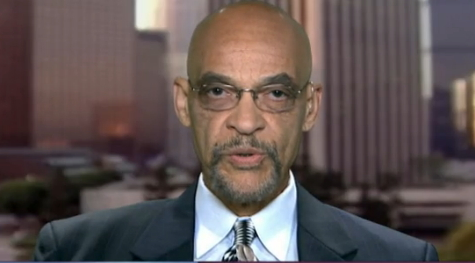
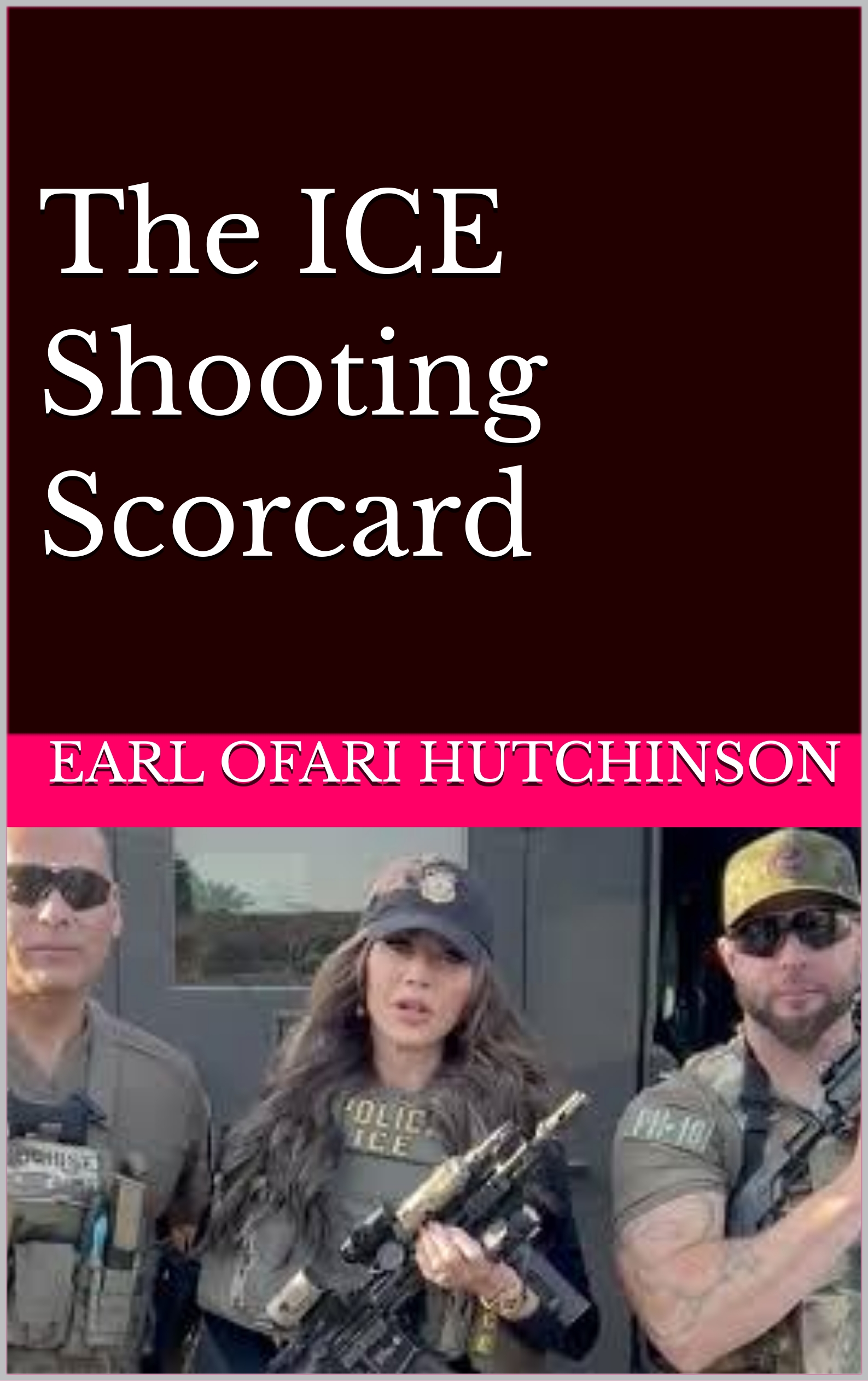
Earl Ofari Hutchinson is an author and political analyst. His latest book The ICE Shooting Scorecard (Amazon ebook and Middle Passage Press PB) He hosts the weekly news and issues commentary radio show The Hutchinson Report Wednesdays 6 PM PST 9 PM EST at ktymgospel.net. and Facebook Livestreamed at https://www.facebook.com/earl.o.hutchinson